Water heater maintenance in the UAE gets ignored for one simple reason: the heater is usually hidden in a ceiling void or behind a utility room door, and it gives no warning until there's water on the floor.
That leak almost always has a long back story. A sacrificial anode that dissolved two years ago. A layer of scale nobody flushed. A relief valve that hasn't moved since installation.
Quick answer: service your water heater once a year, check the anode rod every 12 months, flush out scale yearly, keep stored water at around 60°C, and test the pressure relief valve every six months.
The anode rod: the part that protects your tank
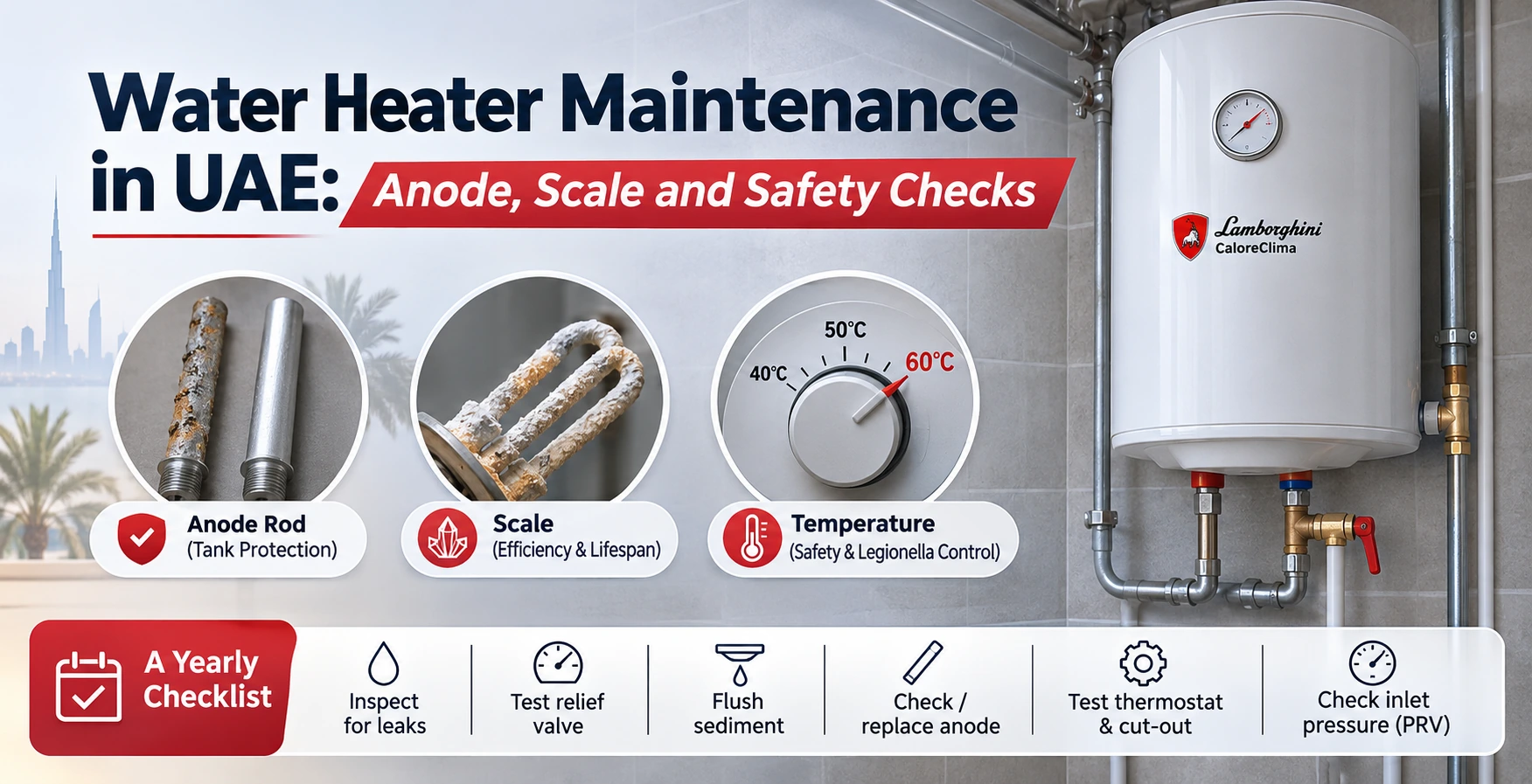
An anode rod is a metal rod, usually magnesium, inside the tank. It corrodes on purpose so the steel tank doesn't. Once it's gone, the tank becomes the thing that corrodes.
Check it every 12 months in the UAE, and replace it when it's heavily pitted or worn down to the core wire. Many manufacturers link tank warranty to anode maintenance, so read your warranty card.
Rotten-egg smell from hot water? That's often a reaction involving the anode and bacteria in the water. Worth a technician visit.
Scale: slow, quiet and expensive
Minerals in the water settle at the bottom of the tank and coat the heating element. Signs include longer heating times, a crackling sound, and the heater tripping its cut-out. A yearly flush through the drain valve clears loose sediment. A heavily crusted element needs descaling or replacement.
A water softener or scale-inhibiting filter on the inlet helps a lot in buildings with poor roof-tank hygiene. It's not essential everywhere, though. If your heater is eight years old and has never had scale problems, don't let anyone sell you a softener out of fear.
Temperature: the safety setting most people get wrong
Many people turn their heater down to save power. Reasonable instinct, risky outcome. The World Health Organization notes that Legionella bacteria live and grow in water between about 20 and 50°C, and recommends that water leaving the heater should be at 60°C or above so that hot water stays above 50°C. Turn a tank down to 40°C and you've created a comfortable home for them.
Keep stored water at around 60°C and use a mixing valve at outlets where scalding is a concern, such as children's bathrooms.
A yearly checklist
| Check | How often | Who |
|---|---|---|
| Look for drips, rust, damp around the tank | Every 3 months | Homeowner |
| Lift the pressure relief valve lever briefly | Every 6 months | Homeowner (carefully) or plumber |
| Flush sediment via drain valve | Yearly | Plumber |
| Inspect or replace anode rod | Yearly | Technician |
| Test thermostat and cut-out | Yearly | Technician |
| Check inlet pressure (PRV setting) | Yearly | Plumber |
Don't skip the pressure check
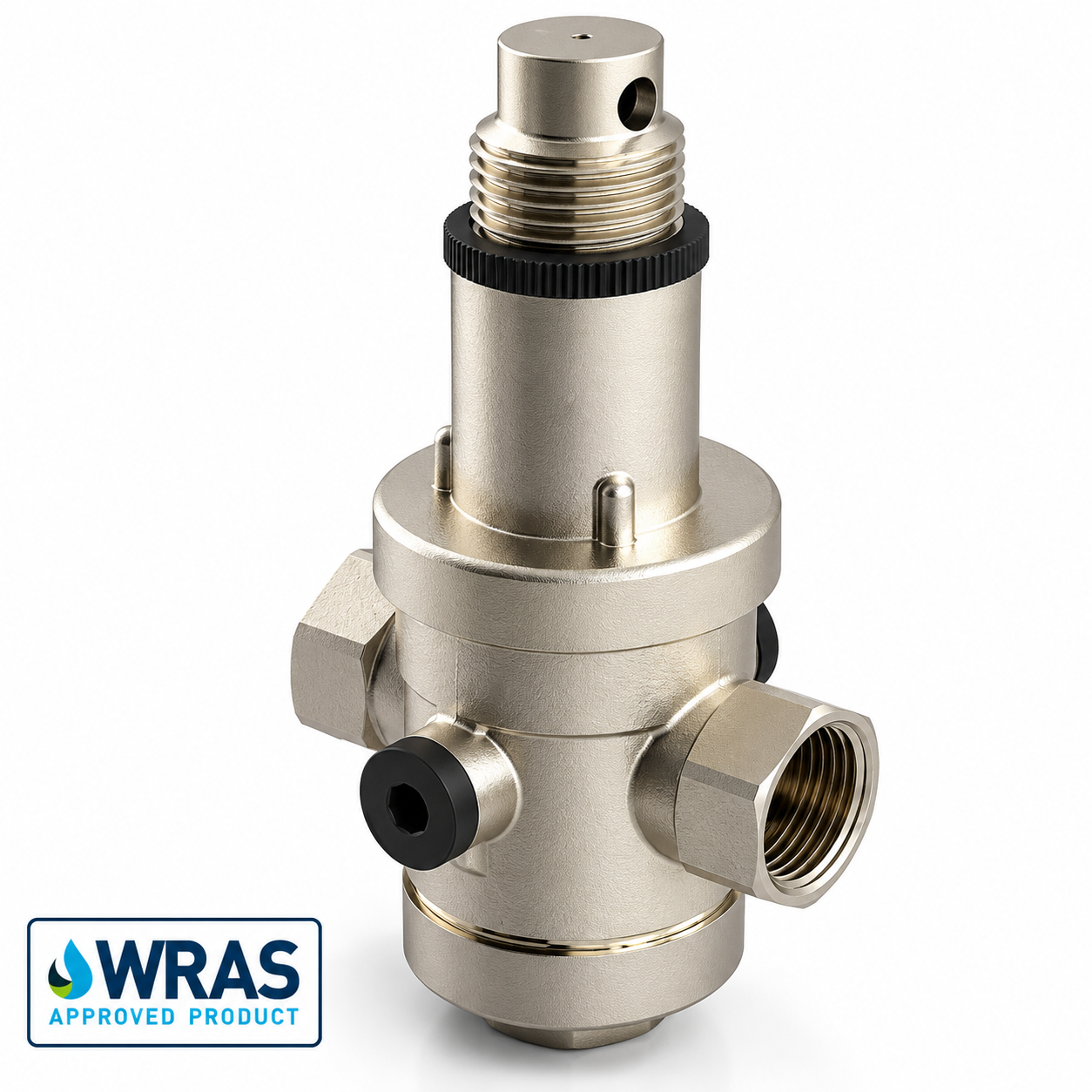
High mains or pump pressure stresses the tank and makes the relief valve drip. A pressure reducing valve on the inlet protects both the heater and your fittings. If the relief valve drips constantly, pressure is the first suspect.
Mistakes we'd steer you away from
- Capping or plugging a dripping relief valve. Never do this.
- Turning the thermostat down to 40°C to save electricity.
- Installing heaters where nobody can reach the drain valve or anode.
- Waiting for a leak before anyone looks at the tank.
Maintenance won't save a heater forever. When the tank itself rusts through, replacement is the only option. When that day comes, see the hot water system range, and if your current heater is acting up now, our guide to a water heater not heating covers the usual faults.
When to call a professional
Homeowners can handle the visual checks, but anode replacement, descaling and thermostat testing are jobs for a qualified technician. Always switch off the power and water supply before anyone opens the tank. If you need a replacement heater, spare parts or advice on water heater service in Dubai and across the UAE, contact the Alabama Building Materials team.