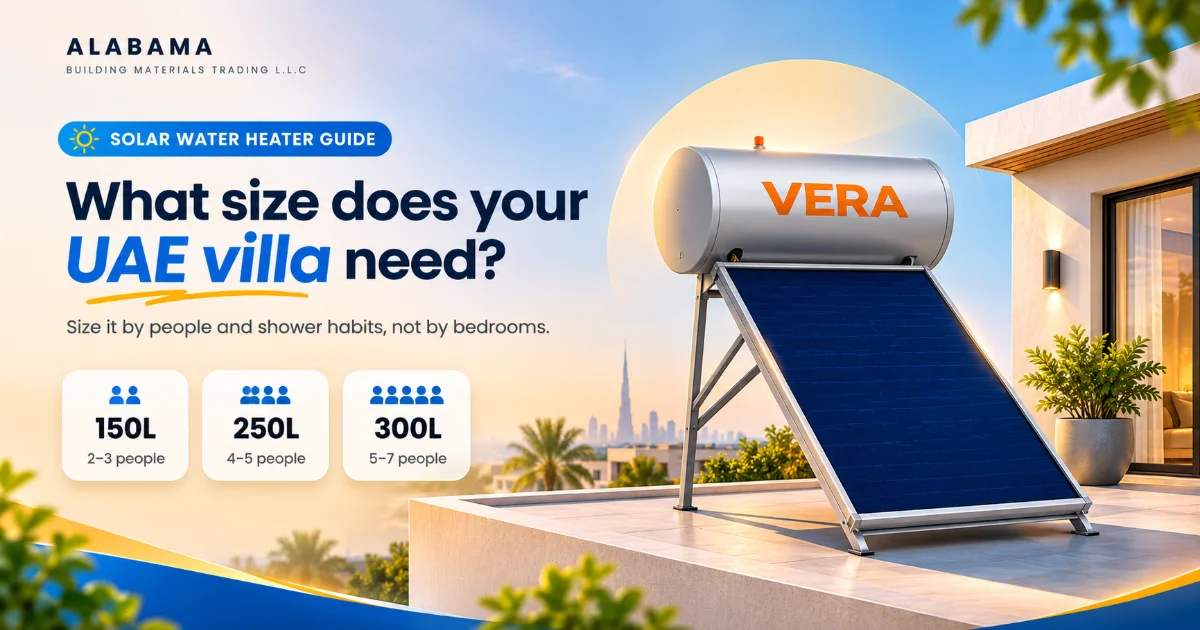
Getting the solar water heater size for a villa right is mostly about one number: how many litres of hot water your household uses between sunset and the next afternoon. The sun handles the heating. Your tank has to hold enough to carry you through the night and the morning rush.
The UAE has the sunshine for it. What trips people up is buying a tank based on bedroom count instead of the way the family actually showers.
A starting point by household size
These are planning ranges, not rules. Use them to start the conversation with your supplier.
| Household | Typical tank range | Example from Alabama's range |
|---|---|---|
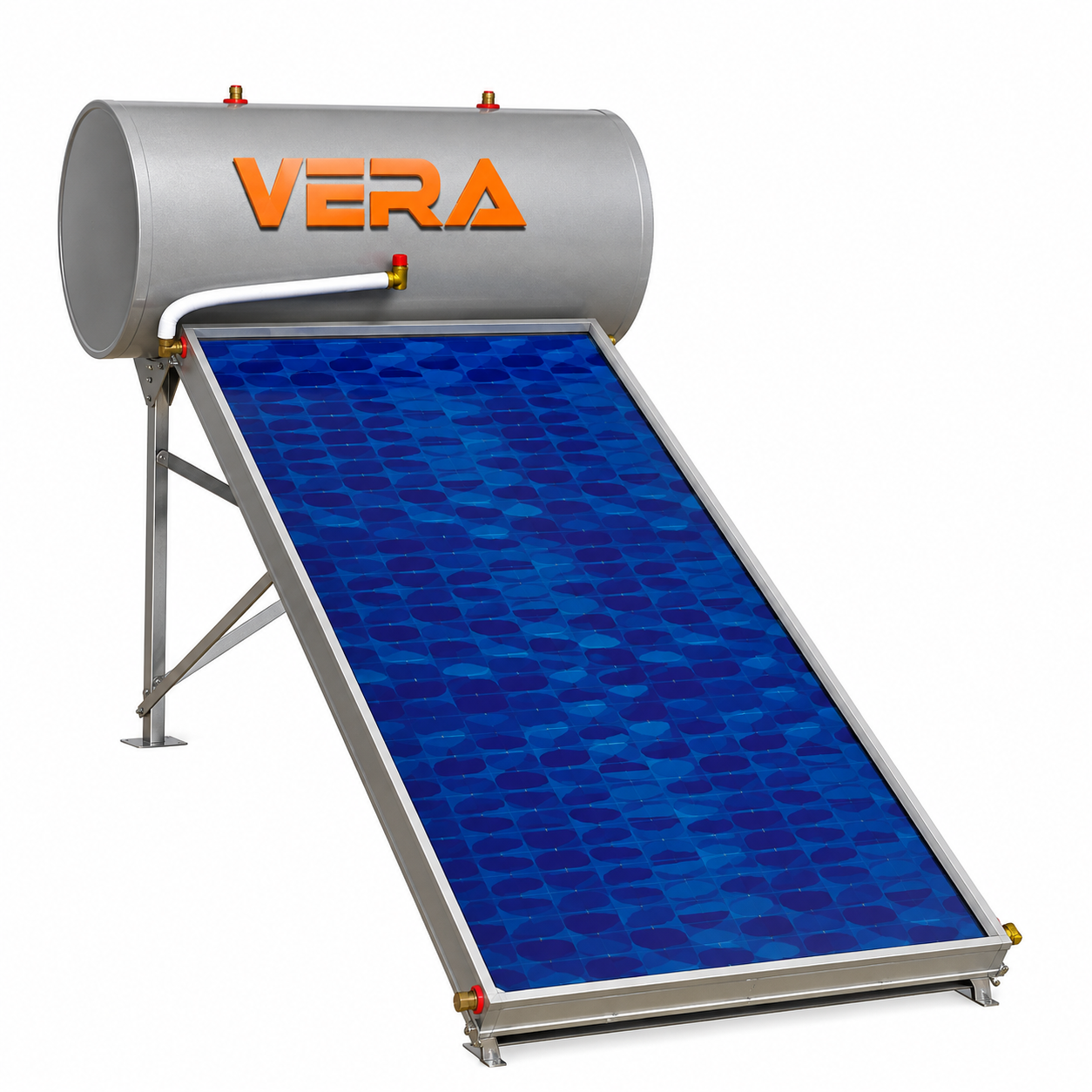
| 2 to 3 people | 150 litres | Vera GRT 150 |
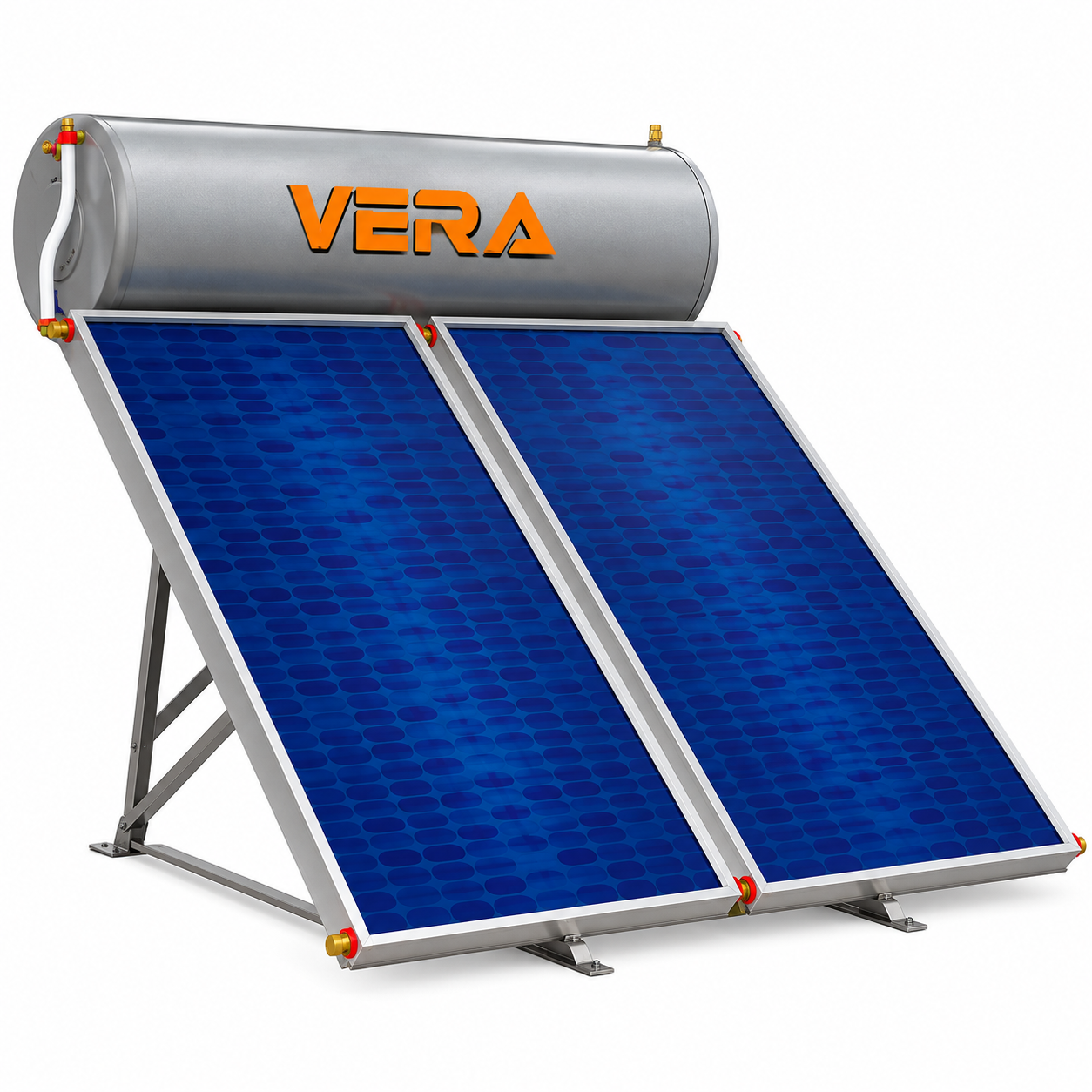
| 4 to 5 people | 200 to 250 litres | GRT MAX-250L |
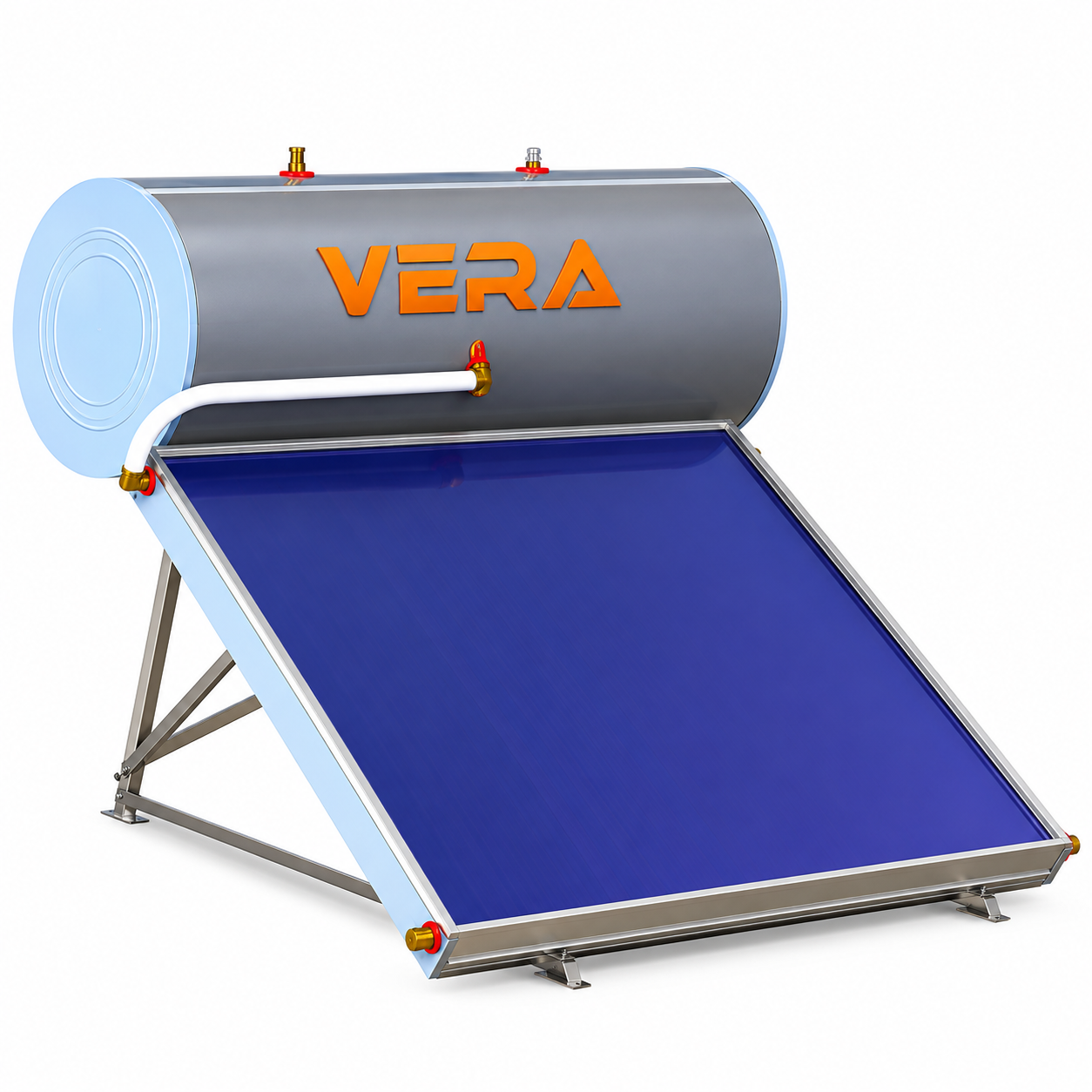
| 5 to 7 people, rain showers, bathtubs | 300 litres or two systems | Vera Solar GRT 300 |
A common rule of thumb is 40 to 60 litres of stored hot water per person per day. Families with long evening showers or a deep bathtub drift toward the top of that range quickly.
Why the electric backup decides your comfort
Solar systems in the UAE almost always include an electric booster element. On most days you won't need it. You will on the odd cloudy, dusty day in January, or when guests arrive and the tank empties by 9pm.
Here's the part buyers get wrong. If the booster is on a timer that runs every evening regardless, you've built an expensive electric heater with panels on top. Set it to come on only when needed, or on a short window before the morning peak.
Summer has its own problem
In June and July, a well-performing collector can push tank temperatures very high. That's why tempering or mixing valves matter on solar installs: they blend stored water down to a safe outlet temperature so nobody gets scalded at the basin.
Worked example: a family of six
A family of six in a four-bedroom villa in Al Barsha. Two adults, four children, two bathrooms in heavy use every evening between 7 and 9pm. At roughly 45 litres per person, that's around 270 litres a day. A 300-litre system gives a small buffer. A 200-litre unit would technically work on paper, but the last child showering every night would be relying on the electric booster, which defeats the point.
Roof space, load and orientation
A 300-litre thermosiphon system full of water is heavy. Your structural engineer or contractor should confirm the roof slab and the mounting points, especially on older villas. Collectors should face south in the UAE and stay clear of shade from parapets, water tanks and AC condensers. Shade from a neighbouring building in the afternoon costs more output than most people expect.
Check also whether your community or developer has rules on visible rooftop equipment. Some gated communities do.
Regulations worth checking
Dubai's green building regulations have pushed solar water heating for new buildings for years. Since March 2012, Dubai has required new single-owner buildings, including private villas, to cover at least 75% of their hot water demand with solar heating, backed by an electric heater for days when the sun is not enough. If you're building new, your consultant will already know the requirement. For retrofits, it's a choice, and usually a sensible one.
Mistakes to avoid
- Sizing on bedrooms rather than people and shower habits.
- Leaving the electric booster on a permanent timer.
- Skipping the mixing valve and dealing with scalding water every summer.
- Mounting collectors where an AC unit or water tank shades them half the day.
- Forgetting that a long pipe run from roof to the furthest bathroom wastes water while you wait.
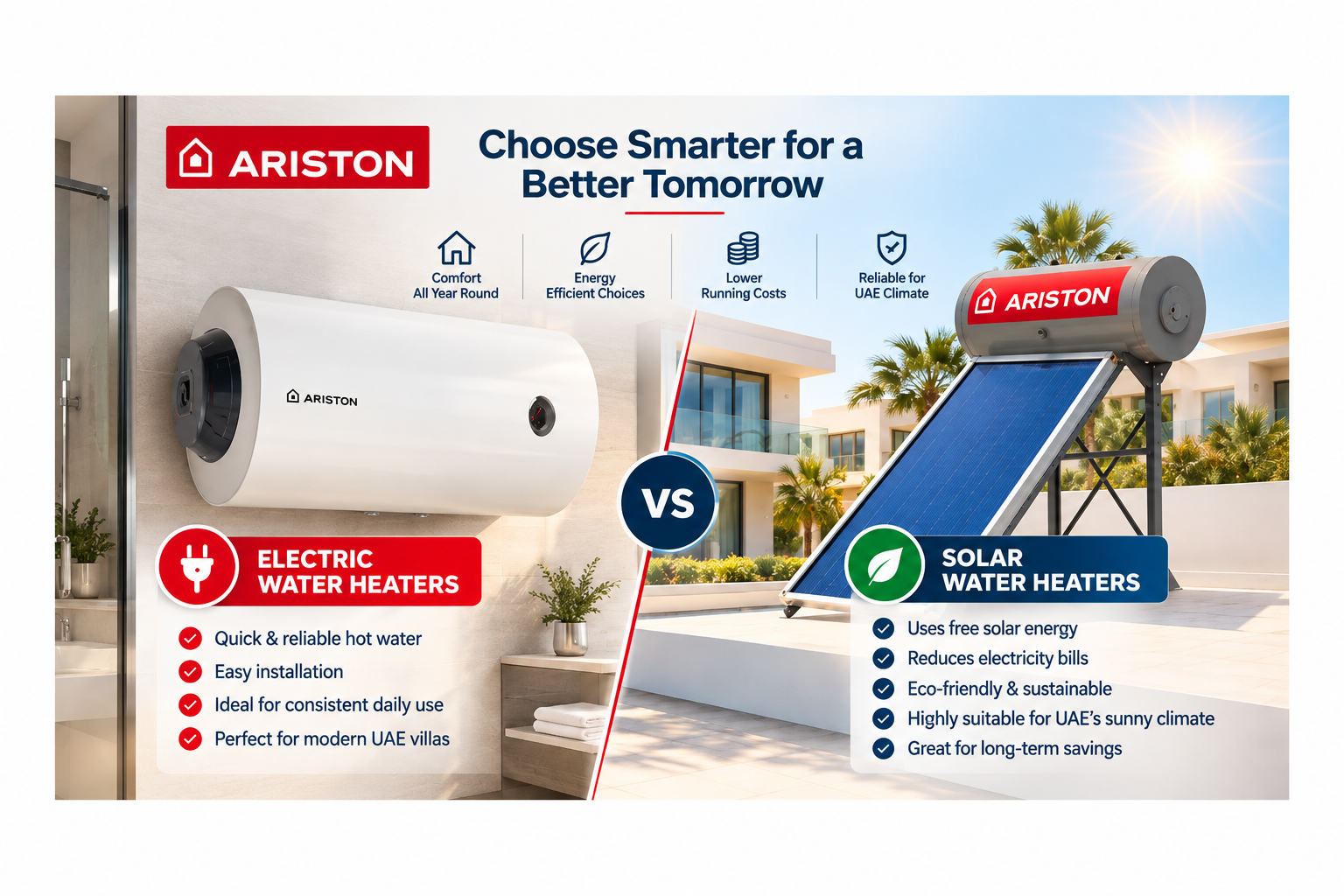
Solar isn't the right answer for every home. Apartments without roof access, or villas where the roof is fully shaded, are better served by electric storage. For the full trade-off, read our electric vs solar comparison.
Ready to size a system? Send Alabama the number of occupants, bathrooms and a photo of your roof, and we'll recommend from the VERA solar range.